
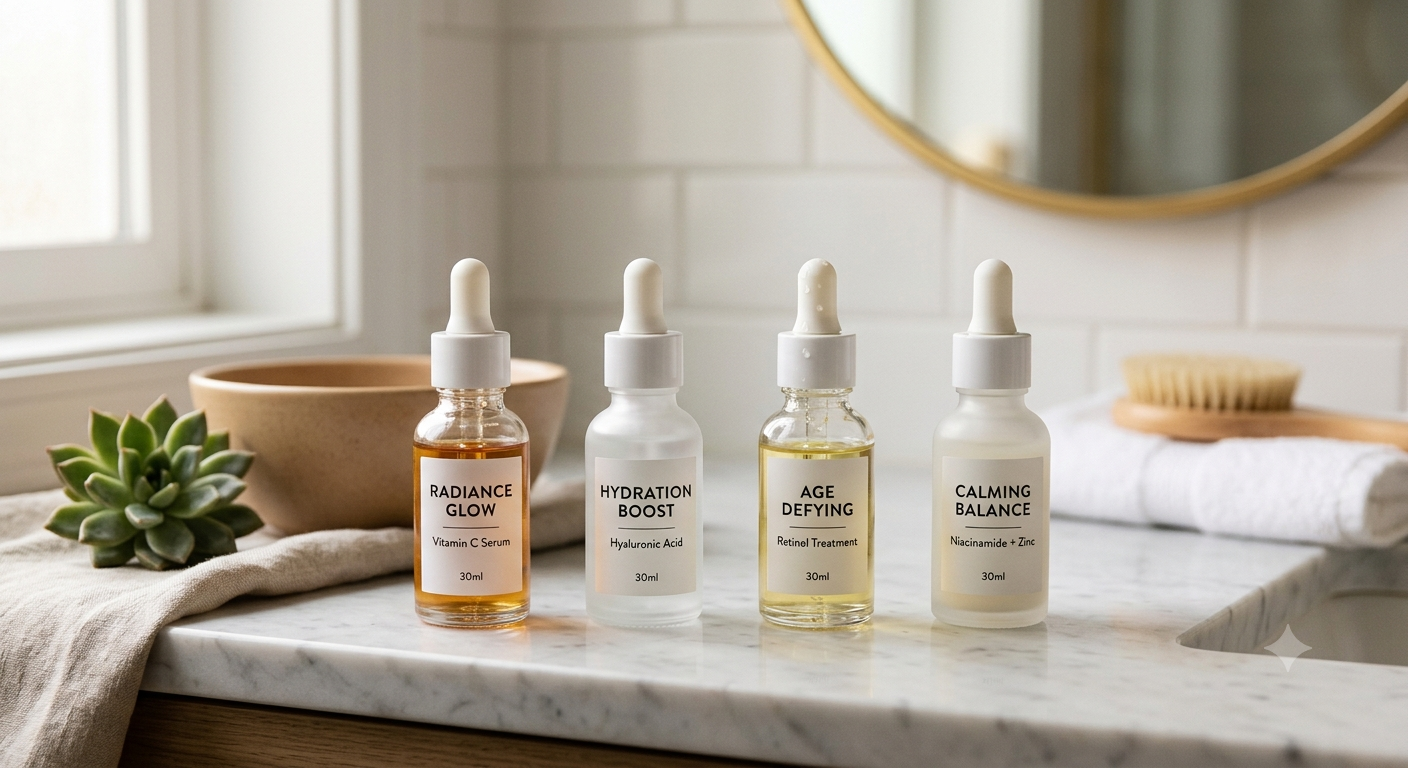
Healthy, glowing skin does not always require a complicated skincare routine. The right skin serum can help target specific concerns such as dullness, dryness, excess oil, acne, uneven skin tone, pigmentation, and early signs of ageing.
With so many products available, choosing the 5 best skin serum for glowing skin can be confusing. The key is to understand your skin type and choose ingredients that match your main concern.
In this guide, we will explore 5 best skin serums for healthy glowing skin, including vitamin C, niacinamide, hyaluronic acid, salicylic acid, and retinol-based options.
Quick note: There is no single serum that is best for everyone. The right serum depends on your skin type, concerns, tolerance, and skincare routine.
What Is a Skin Serum?
A skin serum is a lightweight skincare product containing concentrated active ingredients. Unlike a basic moisturizer, a serum is generally designed to target a particular skin concern.
Depending on the formulation, a face serum may help with:
- Dull-looking skin
- Dryness and dehydration
- Excess oil
- Acne and clogged pores
- Uneven skin tone
- Dark spots
- Fine lines and wrinkles
- Uneven skin texture
Dermatology guidance recommends selecting skincare products according to your specific concern and skin type rather than simply following trends.
5 Best Skin Serums for Healthy Glowing Skin
Here are five popular serum categories worth considering when building a skincare routine.
1. Vitamin C Serum – Best for Brightness and Uneven Skin Tone
Why Choose a Vitamin C Serum?
A Vitamin C serum is one of the most popular choices for people who want brighter-looking and more even-toned skin.
Vitamin C is an antioxidant and is commonly used in skincare products designed to address dullness and the appearance of dark spots. The American Academy of Dermatology notes that vitamin C can help reduce signs of skin ageing and dark spots.
Best For
- Dull skin
- Uneven skin tone
- Dark spots
- Sun-related pigmentation
- Lack of brightness
How to Use Vitamin C Serum
Vitamin C serum is commonly used in the morning after cleansing and before moisturizer and sunscreen.
A simple routine can be:
Cleanser → Vitamin C Serum → Moisturizer → Sunscreen
Remember that vitamin C does not replace sunscreen.
Who Should Consider It?
If your main goal is healthy glowing skin, brighter-looking skin, or improving the appearance of uneven pigmentation, a vitamin C serum may be worth considering.
2. Niacinamide Serum – Best for Oily and Combination Skin
Why Choose a Niacinamide Serum?
Niacinamide, also known as vitamin B3, is a versatile skincare ingredient. It is commonly used in products designed for oily skin, visible pores, acne marks, redness, and skin-barrier support.
Current skincare guides commonly identify niacinamide as an ingredient suitable for oil control and improving the appearance of uneven skin.
Best For
- Oily skin
- Combination skin
- Visible pores
- Excess oil
- Acne-prone skin
- Uneven-looking skin
How to Use Niacinamide Serum
Niacinamide can generally be incorporated into either a morning or evening routine, depending on the formulation.
For beginners:
Cleanser → Niacinamide Serum → Moisturizer
During the daytime, finish with a broad-spectrum sunscreen.
Why It Is Popular
Niacinamide is often chosen because it can address several common skincare concerns at the same time. This makes a niacinamide serum a practical option for people who want a simple skincare routine.
3. Hyaluronic Acid Serum – Best for Dry and Dehydrated Skin
Why Choose a Hyaluronic Acid Serum?
If your skin often feels dry, tight, or dehydrated, a hyaluronic acid serum can be a useful addition to your routine.
Hyaluronic acid is a hydrating ingredient commonly used to increase the skin’s moisture content and create a smoother, more hydrated appearance.
Best For
- Dry skin
- Dehydrated skin
- Tight-feeling skin
- Rough-looking skin
- Skin that needs additional hydration
How to Use Hyaluronic Acid Serum
Hyaluronic acid is often applied after cleansing while the skin is slightly damp.
A simple routine is:
Cleanser → Hyaluronic Acid Serum → Moisturizer → Sunscreen
At night:
Cleanser → Hyaluronic Acid Serum → Moisturizer
Is It Suitable for Beginners?
Yes. A simple hydrating serum can be easier for beginners to introduce than stronger active ingredients.
If your main concern is dryness rather than pigmentation or acne, a hyaluronic acid serum for glowing skin may be more appropriate than choosing a strong exfoliating serum.
4. Salicylic Acid Serum – Best for Acne-Prone and Oily Skin
Why Choose a Salicylic Acid Serum?
Salicylic acid is a beta hydroxy acid (BHA) commonly used in skincare products for oily and acne-prone skin.
It can help exfoliate the skin and is particularly useful for concerns related to clogged pores.
Best For
- Oily skin
- Acne-prone skin
- Blackheads
- Clogged pores
- Uneven skin texture
How to Use Salicylic Acid Serum
Because salicylic acid is an active exfoliating ingredient, beginners should introduce it gradually rather than immediately using it every day.
Start according to the product instructions and monitor how your skin responds.
Important Tip
Avoid combining multiple strong active ingredients in the same routine without understanding their compatibility. Using several irritating actives together can increase the chance of dryness and irritation.
5. Retinol Serum – Best for Texture and Early Signs of Ageing
Why Choose a Retinol Serum?
Retinol is a type of retinoid and is widely used in skincare for concerns such as uneven skin tone, texture, fine lines, and some forms of acne.
The American Academy of Dermatology explains that retinoids can improve skin texture, pigmentation, acne, and fine lines.
Best For
- Fine lines
- Uneven texture
- Uneven skin tone
- Signs of ageing
- Some acne concerns
How to Start Retinol
Retinol should generally be introduced gradually because it can cause dryness or irritation, especially when someone is new to retinoids.
A basic nighttime routine can be:
Cleanser → Retinol Serum → Moisturizer
Start slowly according to the product instructions and increase frequency only as your skin tolerates it.
Important Precaution
People with significant dryness, redness, or certain skin conditions should discuss retinoid use with a dermatologist.
Quick Comparison: Best Skin Serums
| Serum Type | Best For | Common Skin Concerns |
|---|---|---|
| Vitamin C Serum | Brightening | Dullness, dark spots, uneven tone |
| Niacinamide Serum | Oil control | Oily skin, pores, acne marks |
| Hyaluronic Acid Serum | Hydration | Dryness, dehydration |
| Salicylic Acid Serum | Pore care | Acne, blackheads, clogged pores |
| Retinol Serum | Texture & ageing | Fine lines, texture, pigmentation |
The best choice depends on your primary concern. For example, vitamin C is commonly selected for brightness and dark spots, niacinamide for oil-related concerns, hyaluronic acid for hydration, and retinol for texture and signs of ageing.
How to Choose the Best Skin Serum for Your Skin Type
For Oily Skin
Look for ingredients such as:
- Niacinamide
- Salicylic acid
- Lightweight hydrating ingredients
Avoid choosing a serum simply because it is advertised as powerful. Your skin’s tolerance is important.
For Dry Skin
Look for:
- Hyaluronic acid
- Glycerin
- Ceramides
- Panthenol
- Barrier-supporting ingredients
A hydrating serum should ideally be followed by a moisturizer to help maintain hydration.
For Combination Skin
Combination skin may benefit from a lightweight serum that addresses the specific areas of concern.
For example, niacinamide may be useful for oily areas, while a hydrating serum can help areas that feel dry.
For Acne-Prone Skin
Commonly used ingredients include:
- Niacinamide
- Salicylic acid
- Certain retinoids
If acne is persistent, painful, or severe, professional dermatological advice is preferable to continuously changing skincare products.
For Dull Skin
Vitamin C is one ingredient commonly used for dull-looking skin and uneven pigmentation.
How to Use a Skin Serum Correctly
Using a good serum is only one part of a skincare routine.
Step 1: Clean Your Face
Use a gentle cleanser appropriate for your skin type.
Step 2: Apply Your Serum
Use the amount recommended on the product label. More serum does not necessarily mean better results.
Step 3: Apply Moisturizer
Moisturizer helps support the skin barrier and maintain hydration.
Step 4: Use Sunscreen During the Day
A broad-spectrum sunscreen is an important part of a routine, particularly when using products targeting pigmentation, texture, or signs of ageing.
Step 5: Introduce New Actives Slowly
Don’t start several new active ingredients at the same time. Introducing one product at a time makes it easier to identify irritation or intolerance.
Can You Use Multiple Serums Together?
Yes, some serum ingredients can be combined, but more is not always better.
For example, a hydrating serum may fit easily into many routines, while stronger ingredients such as retinol, salicylic acid, AHAs, and certain vitamin C formulations require more careful planning.
Using too many active ingredients together can increase irritation.
A simple skincare routine is often easier to maintain:
Morning:
Cleanser → Vitamin C or Niacinamide → Moisturizer → Sunscreen
Night:
Cleanser → One targeted active → Moisturizer
How Long Does It Take to See Results From a Skin Serum?
Results vary depending on the ingredient, product formulation, skin concern, and individual skin response.
Hydrating products may make skin feel smoother relatively quickly, while concerns such as pigmentation, acne, fine lines, or uneven texture generally require consistent use over a longer period.
Avoid changing your serum every few days. Give your routine enough time to assess whether it is working, unless you experience significant irritation.
Common Mistakes When Using Face Serums
1. Using Too Much Product
Applying more serum does not automatically produce faster results.
2. Using Too Many Actives
Combining several powerful ingredients can increase irritation.
3. Skipping Sunscreen
A serum cannot replace sun protection.
4. Choosing a Serum Without Considering Skin Type
A serum designed for oily, acne-prone skin may not be the best choice for someone with very dry or sensitive skin.
5. Expecting Overnight Results
Healthy-looking skin usually requires consistent skincare and realistic expectations.
Frequently Asked Questions
Which is the best skin serum for healthy glowing skin?
There is no single best serum for every person. Vitamin C is commonly used for brightness and uneven tone, hyaluronic acid for hydration, niacinamide for oil-related concerns, salicylic acid for clogged pores, and retinol for texture and signs of ageing.
Which serum is best for glowing skin?
A vitamin C serum is a popular choice for dull-looking skin because vitamin C can help improve the appearance of dark spots and signs of skin ageing.
Which serum is best for dry skin?
A hyaluronic acid serum can be a useful choice for dry or dehydrated skin because it focuses primarily on hydration.
Which serum is best for oily skin?
Niacinamide and salicylic acid are commonly used for oily and acne-prone skin. The better choice depends on whether your main concern is excess oil, visible pores, clogged pores, or acne.
Can I use serum every day?
It depends on the serum. Hydrating and some niacinamide serums may be suitable for regular use, while stronger active ingredients such as retinol or exfoliating acids may need gradual introduction.
Should I use serum before or after moisturizer?
Generally, serum is applied before moisturizer. A common order is:
Cleanser → Serum → Moisturizer → Sunscreen
Can I use vitamin C and niacinamide together?
Many modern formulations and skincare routines use vitamin C and niacinamide together. However, individual formulations and skin tolerance matter, so follow the product instructions and introduce new products gradually.
Should I use retinol every night?
Not necessarily. Beginners often introduce retinol gradually and increase frequency according to skin tolerance and product instructions. Retinoids can cause irritation, particularly in people with dry or sensitive skin.
Is serum necessary for healthy skin?
No. A serum is an optional targeted step. A basic routine of gentle cleansing, moisturizing, and daily sunscreen can provide an important foundation for healthy skin. A serum can then be added to address a specific concern.
Conclusion
Choosing the 5 best skin serums for healthy glowing skin is less about finding one universally perfect product and more about finding the right active ingredient for your skin concern.
Vitamin C serum can be useful for dullness and uneven tone. Niacinamide serum is commonly used for oily and combination skin. Hyaluronic acid serum focuses on hydration. Salicylic acid serum is often selected for oily and clogged skin. Retinol serum can help address texture, pigmentation, acne, and early signs of ageing.
The most important approach is to keep your routine simple, introduce active ingredients gradually, moisturize regularly, and use sunscreen during the day.
Healthy glowing skin comes from consistency—not from using the largest number of skincare products.